Sales@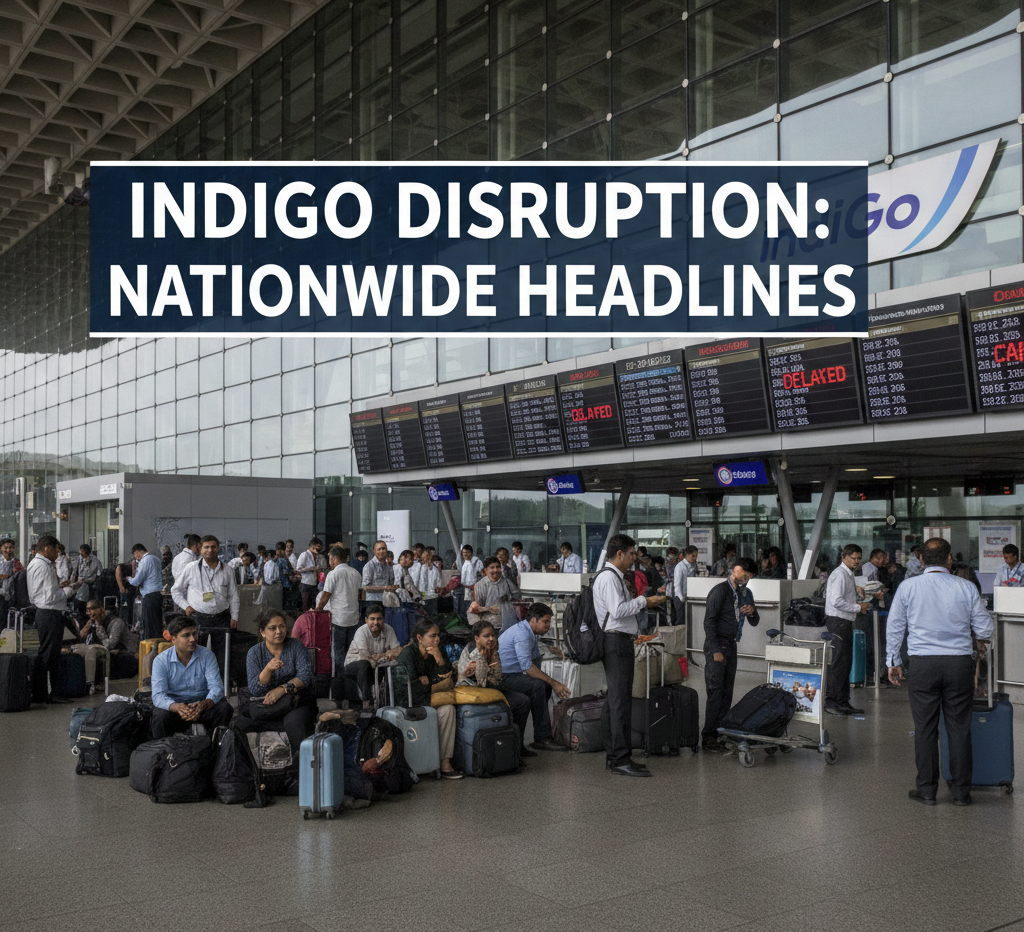
✈️ “When India’s biggest airline stumbles, 1000s of dreams stay grounded.”
Imagine arriving at the airport for a business-class flight — expecting a smooth check-in, a comfortable cabin, maybe a quick nap or a meeting in the sky, only to end up waiting in serpentine queues, facing uncertainty about whether your flight will even take off. That’s what tens of thousands of travellers — from professionals going to meetings, to families returning home — experienced when IndiGo, long considered India’s most reliable airline, went into free-fall.
In early December 2025, what began as “some delays” turned into a nationwide operational meltdown. Over 1,000 flights cancelled in a single day. On-time performance (OTP) collapsed. Airports across India — Delhi, Mumbai, Bengaluru, Hyderabad, Chennai, Ahmedabad and more — descended into chaos. For many, December travel plans turned into a nightmare.
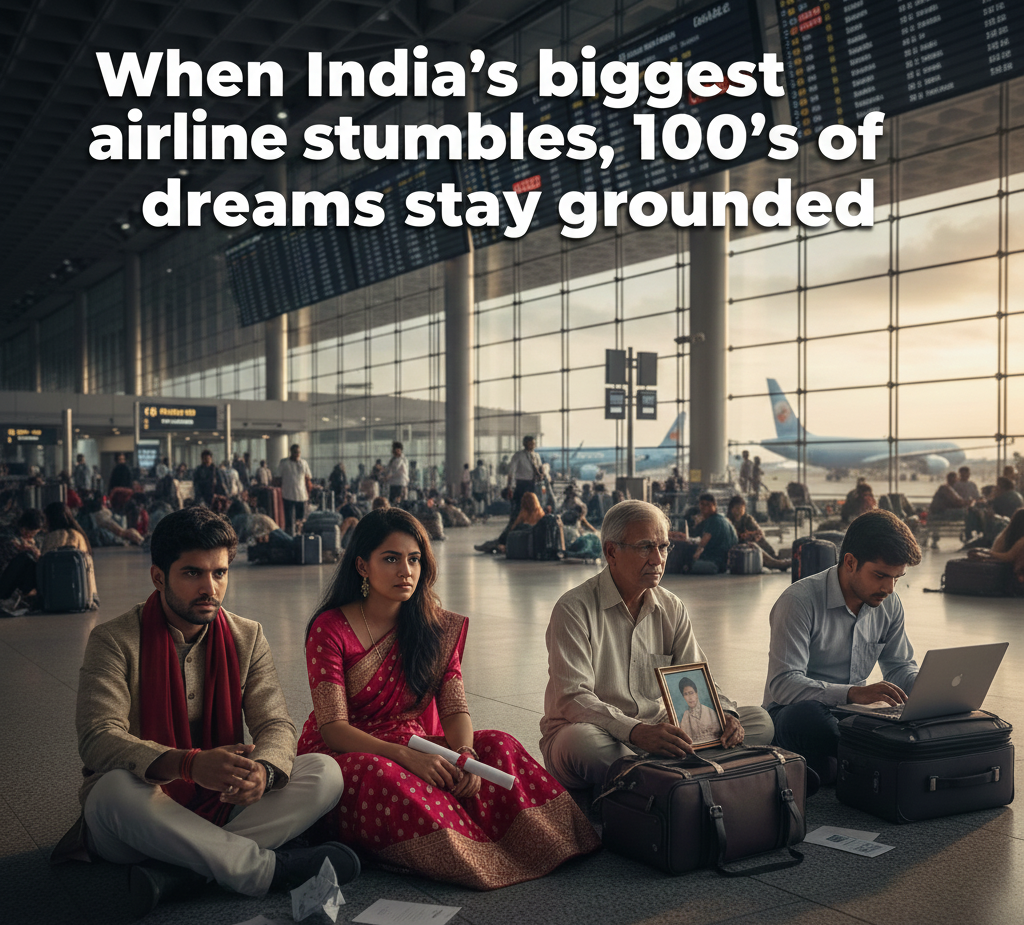
In the midst of this chaos, the question on everyone’s mind is, Why IndiGo’s Disruption Is Making Headlines Across India’s Aviation Sector. This incident has not only affected passengers but has also sent shockwaves through the entire industry.
If you think airlines are invincible because of their networks — think again. Because when operations, planning and trust break, the fallout is massive.
📉 What Went Wrong: Anatomy of the IndiGo Crisis
🔧 Regulatory Changes Meet Poor Planning
The root of the disruption lies in newer rules mandated by the aviation regulator DGCA — the revised “Flight Duty Time Limitations (FDTL)” norms. These were designed to improve safety by reducing pilot fatigue through stricter rest periods and caps on night-flying duties. (The Times of India)
Airlines, including IndiGo, were given a preparatory window (multiple months) to reorganise crew rosters and staffing. But according to critics — including pilot-bodies like FIP (Federation of India Pilots) — IndiGo failed to use that time effectively. They are alleged to have adopted a hiring freeze, maintained “lean staffing”, and avoided aggressive recruitment even while expanding operations and fleet. (India Today)

When the new FDTL norms came fully into force (from November 1, 2025), the cracks showed. By early December, pilot shortage + fatigue-management constraints collided with high demand — especially as December is a peak travel month.
😬 Operational Meltdown: Cancellations, Delays, Chaos
- On December 5, 2025 alone, over 1,000 flights were cancelled nationwide. (The Times of India)
- The disruption was not confined to one or two airports — it hit almost every major hub: Delhi, Mumbai, Bengaluru, Hyderabad, Chennai, Ahmedabad, Jaipur, and more. (The Times of India)
- For many airports, entire domestic schedules from IndiGo were grounded. For example, on December 5, all domestic departures from Delhi airport were cancelled until midnight. (Business Standard)
- At its worst, the on-time performance (OTP) plunged to as low as 8.5%. (The Times of India)
- A report even pegged punctuality at a shocking 3.7% in early December. (Business Standard)
- With schedules thrown off, airports saw scenes of chaos: bustling terminals, angry passengers, lost luggage piling up, people stranded, etc. (The Times of India)
In short: what should have been “occasional inconvenience” turned into India’s worst aviation disruption in recent years — and it dragged on for days.
📢 Fallout from Regulatory & Public Pressure
The disruption triggered a serious backlash:
- The DGCA issued a show-cause notice to the airline’s senior management (CEO & top officials), demanding explanation. (mint)
- The government (Ministry of Civil Aviation) ordered a high-level probe via a panel to assess what went wrong and recommend corrective measures. (The New Indian Express)
- As chaos mounted, and trust dropped, the regulator even temporarily halted the enforcement of the new FDTL norms (for some period) to avert further disruption — a sign of how serious the crisis had got. (India Today)
Meanwhile, the airline scrambled to manage the fall-out: promises of refunds, travel reschedules, free re-booking, waiver of cancellation/rescheduling fees, hotel stays for stranded passengers, baggage assistance — all rolled out as “damage-control”. (The Times of India)
And yet public anger soared. Negative media, social-media storms, and damage to brand trust became unavoidable.
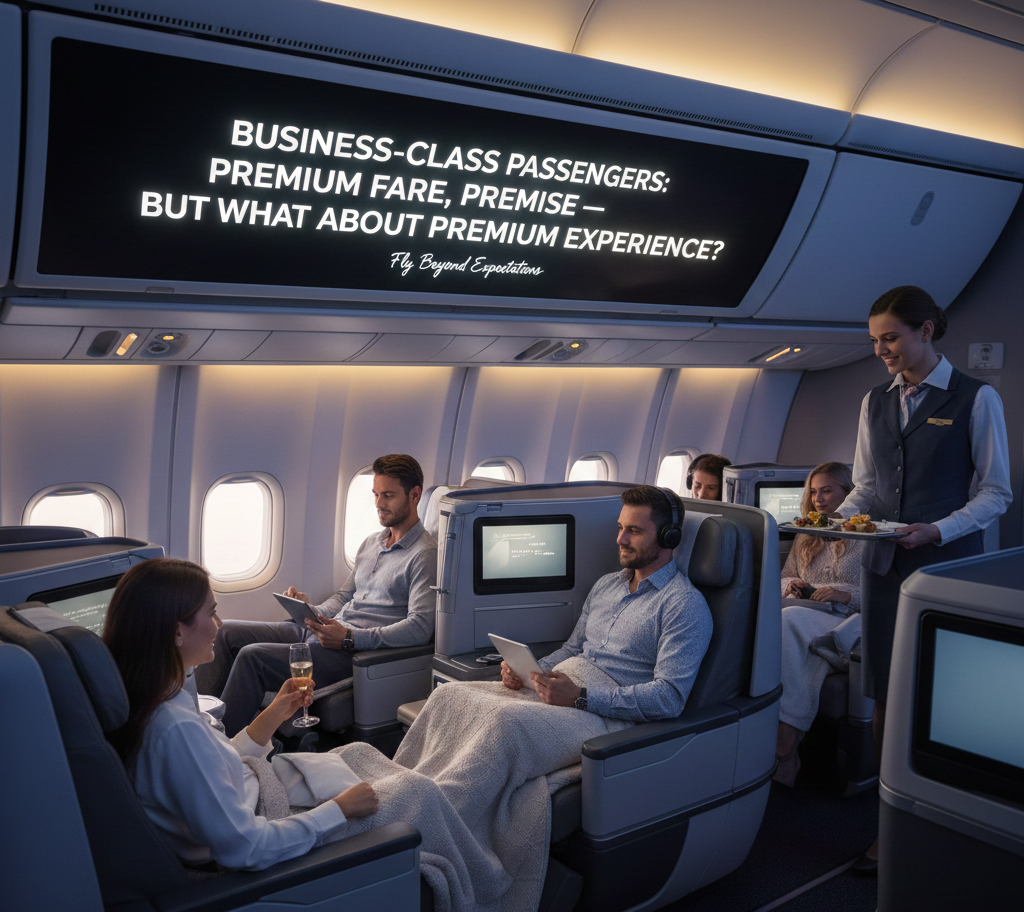
💼 Business-Class Passengers: Premium Fare, Premise — But What About Premium Experience?
Until recently, many frequent flyers and business travellers picked IndiGo because it offered a strong mix: efficient network, relatively on-time flights, competitive fares — and on select aircraft/routes, a “Business-class” option (for example, on their newer A321-Neo planes). However, this disruption exposed how fragile that value proposition had become.
🔹 Premium Ticket but No Premium Promise
Business-class passengers – used to paying a premium for comfort, convenience and reliability — found themselves facing the same, or worse, chaos as economy flyers. Some of the issues being reported (especially during this crisis) include:
- No separate or smooth check-in / boarding process. Stranded business-class passengers queued just like economy flyers.
- On many flights that eventually operated, business-class service (meals, in-flight hospitality) was reportedly inconsistent — potentially because crew were overworked or stretched thin due to staffing constraints.
- Lost or delayed luggage — even for business travellers. Baggage management seems overwhelmed with volume of disrupted flights, leading to widespread complaints.
- Delays and cancellations causing missed meetings, missed connecting flights, lost time — something business-class travellers least expect when paying extra.
One could argue: if business-class passengers aren’t getting the “premium” experience, then what’s the point of paying more? And this may damage not just trust, but long-term loyalty.
🔹 The Hidden Cost: Time, Reputation, Opportunity Loss
For many business travellers, time = money + reputation + opportunity. A cancelled flight might mean:
- Missing a critical meeting or event
- Delayed project timelines
- Wasted hotel bookings
- Extra costs for last-minute alternatives
These costs — often intangible — accumulate. For companies that book these tickets, repeat disruption means they may reconsider using IndiGo for premium travel.
And for IndiGo brand’s positioning — as a full-service-ish low-cost carrier with a business-class tier — this disruption could erode the sense of “value for money.”
🌐 Macro Impact: What This Means for Indian Aviation & Travel Industry
🛑 Erosion of Trust in the “One-Carrier Dominance” Model
IndiGo is (or was) by far the largest domestic airline in India — holding over 60% of the market share. (Wikipedia)
When such a dominant player falters, the ripple effect is massive:
- Hundreds of thousands of travellers across the country get affected — not just from metros, but also tier-2 and tier-3 cities.
- Related services — airport staff, ground handling, hotels, taxi services, connecting flights — all get disrupted.
- Market confidence (investors, business clients, frequent flyers) gets shaken. Indeed, reports suggest that shares of the airline’s parent company plunged significantly. (Reuters)
This crisis might trigger demand for alternatives — travellers may consider other airlines, even if more expensive, for reliability. That could reduce IndiGo’s dominance, especially if the disruption persists or repeats.
📉 Regulatory & Industry Consequences
The involvement of DGCA, government panel, show-cause notices and possibly extended oversight means the aviation industry will be watching closely. The fallout could include:
- Stricter crew rostering / fatigue-management compliance for all airlines — not just IndiGo.
- More robust contingency planning for large airlines. Regulators may demand demonstration of staffing / crew-management readiness before approving schedules.
- Pressure on airlines to improve customer-service mechanisms (refunds, rescheduling, passenger communication) — else face penalties.
- Potential redistribution of flight-slots if IndiGo is found to have systematically under-staffed.
This incident might mark a turning point in Indian aviation: from growth-at-all-costs to sustainable operations with safety and customer experience as key pillars.
📊 The PR and Brand-Marketing Damage
From a marketing / brand management perspective, this disruption is a massive blow:
- IndiGo’s image of “efficient, affordable, and somewhat premium” has taken a hit.
- Negative reviews, social-media outrage, and mainstream media headlines — all contribute to long-term brand distrust.
- Frequent flyers and business travellers — once loyal — may switch to competitors.
Once “on-time flights + budget fares” becomes a source of mockery or frustration, it’s hard to reclaim brand goodwill.
For the greater travel ecosystem, Indian consumers may now demand more transparency at booking — clearer refund/reschedule policies, reliable communication, real-time flight status updates, realistic estimates, and contingency planning.
🧑💼 What Could IndiGo Have Done (or Still Should Do) — A Marketer’s & Strategist’s Take
Looking at this through the lens of digital marketing, brand trust, and customer experience — here are the key lessons and prescriptions:
✅ Invest in Robust Crew & Resource Planning — Not Just Fleet & Expansion
- Regulatory changes (like FDTL) are foreseeable — especially when mandated years ahead. IndiGo (and other airlines) should treat such regulatory shifts not as afterthoughts, but as strategic planning triggers.
- Ensure adequate pilot/cabin-crew numbers before scaling schedules. Hiring freezes during expansion spells danger.
- Use predictive modeling & stress-testing of flight schedules against worst-case staffing and seasonal demand.
📣 Proactive & Transparent Communication — Even Before Problems Escalate
- Send timely updates to passengers — early warnings when flights are likely to get cancelled or delayed.
- Enable alternative re-booking or compensation seamlessly — reduce friction in refunds/rescheduling.
- Use social media and customer-service channels not just for PR-damage control, but as real-time information hubs and support centers.
🎯 Re-Define & Safeguard “Premium / Business-Class” Value
- If selling “Business-class”, ensure that premium travellers get true premium experience: dedicated check-in, guaranteed luggage priority, lounge access (where possible), consistent in-flight service.
- Compensate business travellers (especially corporates) for inconvenience — may be loss of revenue, opportunity, or reputation. A gesture helps rebuild trust.
- Offer loyalty benefits / future discounts to affected premium customers — building goodwill over short-term loss.
🛡️ Crisis Management & Contingency Planning Should Be Core, Not Optional
- Have backup crew rosters, contingency staffing, reserve pilots/crews on standby, especially around policy change rollouts or peak travel seasons.
- Build “redundancy buffers” — don’t operate at 100% capacity at all times; allow slack to absorb shocks.
- Plan for worst-case customer-service load: refunds, complaints, baggage issues, re-booking help, hotel arrangements for stranded passengers.
📈 Use This As A Reset — Reposition the Brand with Transparency & Customer-Centricity
Instead of “promises of growth,” market “commitment to reliability.”
Messaging could shift: “We grew fast. We learned when we stumbled. Now we commit to doing right — by you.”
Offer public acknowledgement, structured apology, and long-term improvements. That goes a lot farther than temporary discounts.
🔎 What the Disruption Says About Indian Air Travel — Bigger Picture
- Dominance doesn’t guarantee reliability. Market share can be a liability if not backed by operations. For a country with rising air-travel demand, over-reliance on a single airline makes the entire system fragile.
- Regulation matters — but compliance must be real. FDTL norms were introduced for pilot safety and to reduce fatigue risks. The objective was valid. But compliance needs planning, not ad-hoc adjustments.
- Consumers are becoming less tolerant — and more vocal. Social media complaints, viral videos of stranded passengers or lost luggage — these matter today more than ever. A bad experience spreads fast, trust erodes faster.
- Customer experience is as critical as fleet size & ticket price. Especially for premium travellers — time is money; reliability is non-negotiable. No amount of fleet expansion compensates for broken schedules and chaotic ground operations.
- Travel demand is mutating — expectations are rising. People want not just cheap flights — but predictability, comfort, transparency, support. Airlines ignoring this risk long-term brand damage.
⚠️ For Travellers: What to Keep in Mind If You Must Fly During This Crisis
- Check flight status constantly, including on the day of travel. Even if you booked weeks ago, things can change.
- Be ready for plan-B or plan-C — Have backup travel options (alternate airlines, trains, road) especially if schedule is tight.
- Know your rights — Refunds, re-booking, compensation (in some cases) are available, especially if cancellation comes within 24 hrs. The regulatory environment (DGCA norms) supports passenger rights.
- Buy refundable or flexible tickets, if possible — or consider travel insurance, especially around times of regulatory or operational upheaval.
- Avoid unrealistic expectations — even if you have “Business Class,” the disruption may affect you just like everyone else.
📌 What This Means for Marketers, Travel Agencies & Corporate Travel Planners
- For travel agencies: don’t just book tickets — communicate risk, have backup plans, offer alternative carriers, prepare for customer support if flights get disrupted.
- For corporate travel planners: reconsider over-relying on a single “default” airline. Diversify vendor base to reduce risk.
- For marketers: this is a moment to pivot narrative — from “growth, network, low-cost” to “reliability, transparency, customer-first.” Use honesty and clarity to rebuild trust.
- For loyalty and frequent-flyer programmes: this is the time to offer real value — compensations, goodwill gestures, flexible re-booking — not just miles or points.
Conclusion — “Disruption is acceptable. But broken trust isn’t.”
IndiGo’s December 2025 collapse was not just a series of cancelled flights — it was a wake-up call for Indian aviation. When an airline that dominates more than half the domestic market fails, the consequences cascade: stranded passengers, lost business opportunities, ruined travel plans, chaotic airports, shaken investor confidence, and a tarnished brand image.
For many travellers — especially business-class flyers paying premium fares — the disruption exposed a harsh truth: paying more doesn’t always guarantee better experience.
But every crisis presents an opportunity. For IndiGo (and other airlines), this is a chance to pause, reflect, and rebuild with purpose. Rigorous crew-planning, realistic scheduling, transparent communication, stronger customer support, and a genuine commitment to reliability — these are the investments that matter now.

Because in aviation, when you’re up in the air, you don’t just fly customers — you fly hope, trust, urgency, dreams. Break that, and no frequent-flyer points or business-class labels can patch it up.
If IndiGo wants a future beyond this crisis, it must not just restore flights — it must restore confidence. And that’s harder than taking off.