Sales@
By a Sustainability Analyst & Circular-Economy Strategist
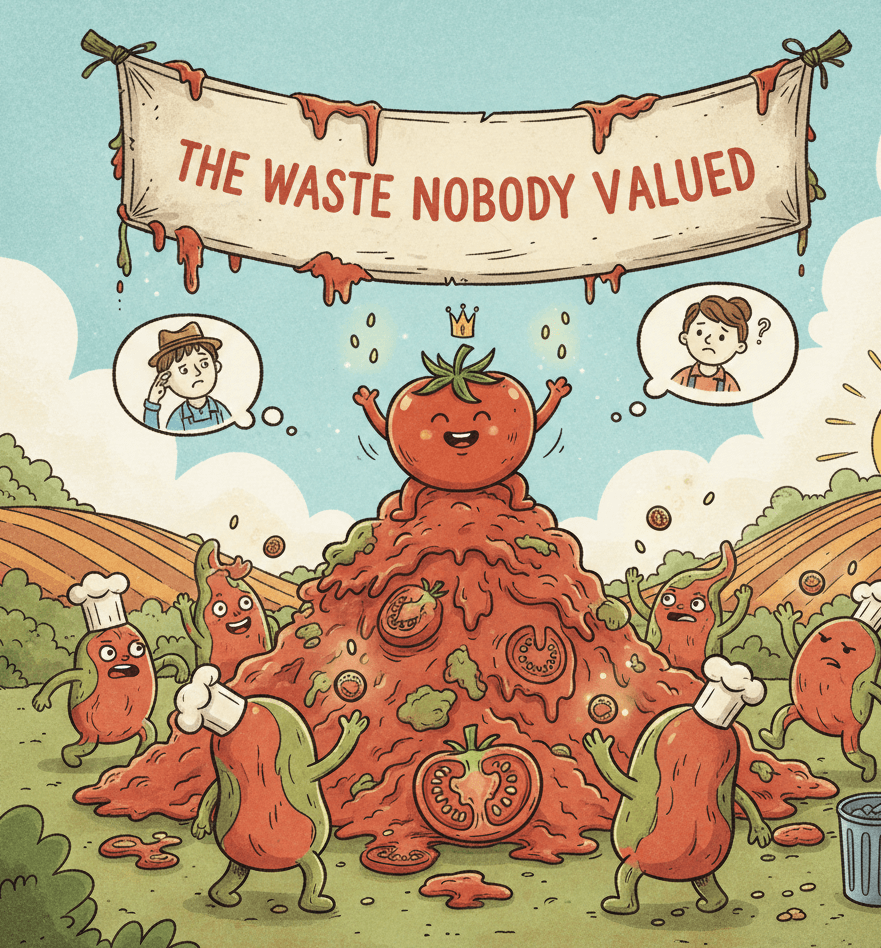
The Waste Nobody Valued
Every year, the world produces over 180 million tonnes of tomatoes, making them one of the most cultivated food crops on the planet. From ketchup and sauces to canned foods and ready-to-eat meals, tomatoes are everywhere. But behind this abundance lies an uncomfortable truth: 30–40% of processed tomatoes become waste—skins, seeds, and pulp discarded after juice and paste extraction.
This organic by-product often ends up in landfills or low-value animal feed, releasing methane as it decomposes and adding pressure to already strained waste-management systems.
At the same time, the fashion industry—particularly the leather supply chain—remains one of the world’s most polluting sectors. Traditional leather tanning relies on toxic chemicals like chromium salts, consumes massive volumes of water, and generates hazardous wastewater that disproportionately impacts communities in developing economies.
For decades, the solution appeared binary: animal leather with environmental cruelty, or plastic-based “vegan” leather that trades ethics for petrochemical pollution.
Then came an unexpected idea.
What if agricultural waste—specifically tomato waste—could become a durable, flexible, leather-like material?
What if the future of fashion began in a food processing plant?
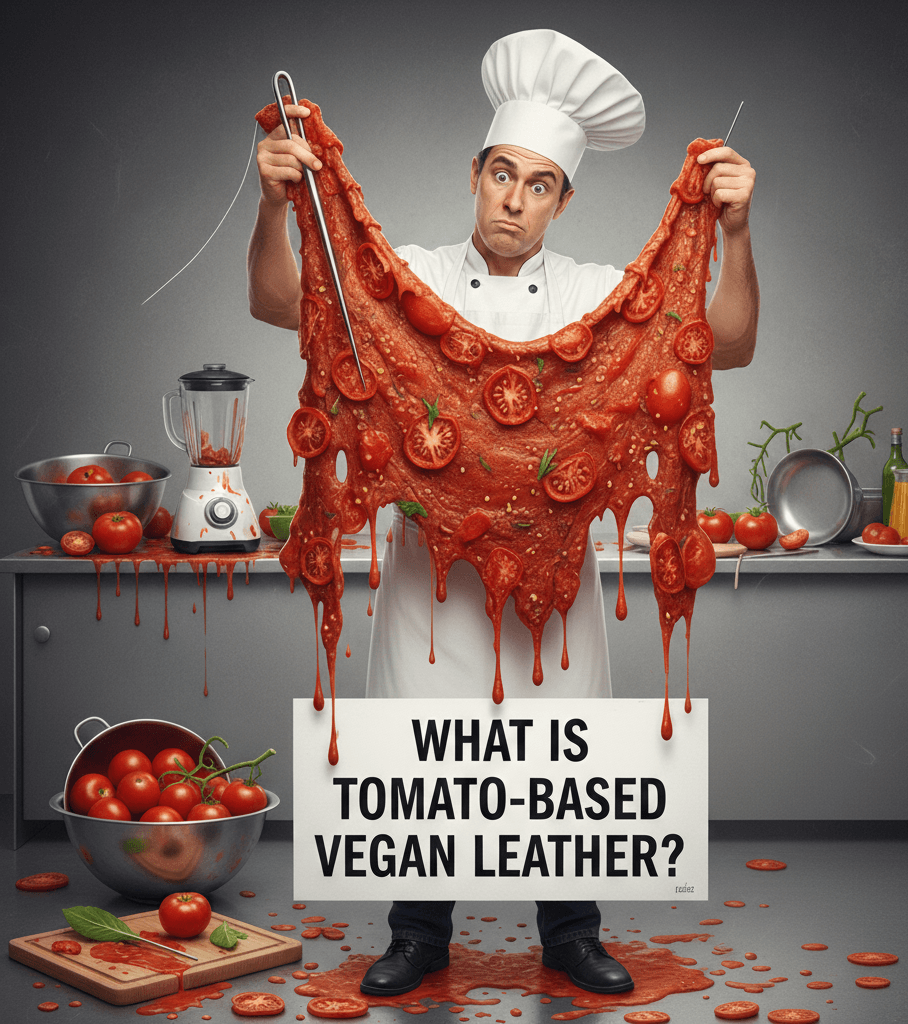
What Is Tomato-Based Vegan Leather?
Tomato-based vegan leather is a plant-derived, non-animal material created from the fibrous and polymer-rich waste left after tomato processing. Instead of treating peels and seeds as disposal problems, innovators treat them as raw material for circular manufacturing.
🔍 How It’s Different from Other Materials
Animal Leather
- Requires livestock farming → high methane emissions
- Energy- and chemical-intensive tanning
- Ethical concerns around animal welfare
PU/PVC Synthetic Leather
- Derived from fossil fuels
- Non-biodegradable
- Microplastic shedding and toxic additives
Tomato Leather
- Uses existing agricultural waste
- Significantly lower water and carbon footprint
- No animal inputs
- Potential for partial or full biodegradability
🍅 Why Tomato Waste Works So Well
Tomato skins and seeds contain:
- Natural fibers for tensile strength
- Pectin and biopolymers for binding
- Cellulose structures ideal for sheet formation
These properties make tomato waste uniquely suitable for transformation into flexible, leather-like surfaces without heavy synthetic reinforcement.
The Science Behind Tomato Leather



At its core, tomato leather innovation is a materials science breakthrough rooted in bio-composites.
Key Scientific Processes (Simplified)
1. Fiber & Biopolymer Extraction
Tomato waste is rich in cellulose fibers and natural polymers like pectin. These components are isolated through mechanical and low-impact chemical processes.
2. Bio-Binding Technology
Instead of petroleum-based binders, manufacturers use:
- Plant-derived resins
- Natural latex alternatives
- Bio-based polyurethane hybrids (in transitional models)
3. Material Engineering
By adjusting fiber length, polymer ratios, and curing methods, producers can control:
- Thickness
- Flexibility
- Grain texture
- Tear resistance
⚙️ Performance Characteristics
| Property | Tomato Leather |
|---|---|
| Breathability | Medium–High |
| Water Resistance | Moderate (enhanced with bio-coatings) |
| Durability | Comparable to light–medium PU leather |
| Texture | Soft, matte, leather-like |
| Weight | Lighter than animal leather |
This balance makes tomato leather especially attractive for fashion accessories, interiors, and lifestyle products.
Step-by-Step: From Tomato Waste to Wearable Material
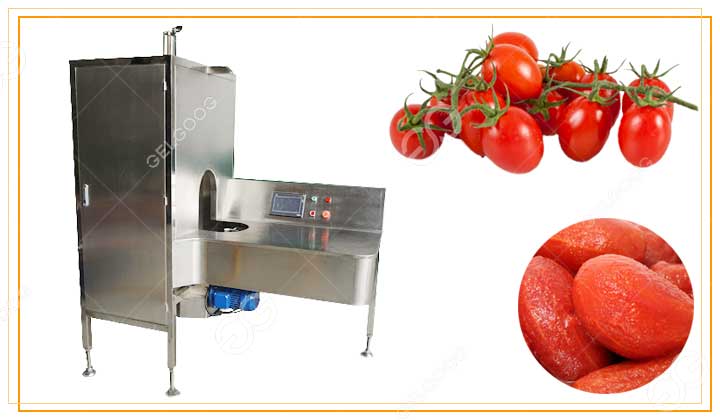

Step 1: Waste Collection
Tomato peels, seeds, and pulp are collected directly from:
- Sauce factories
- Ketchup manufacturers
- Canning plants
✔ Sustainability win: No additional land, water, or crops required.
Step 2: Drying & Stabilization
The waste is dried using:
- Low-energy dehydration
- Solar-assisted systems (in warm climates)
✔ Prevents decomposition and methane emissions.
Step 3: Fiber Extraction
Mechanical milling separates usable fibers and polymers.
✔ Minimal chemical input compared to tanning.
Step 4: Sheet Formation
Fibers are blended with bio-resins and cast into sheets using compression or roll-to-roll processes.
✔ Energy-efficient and scalable.
Step 5: Finishing & Coating
Natural waxes or bio-coatings enhance:
- Water resistance
- UV stability
- Surface aesthetics
✔ No chromium, no toxic sludge.
Environmental Impact Analysis
🌍 Comparative Sustainability Snapshot
| Metric | Animal Leather | PU Leather | Tomato Leather |
|---|---|---|---|
| Water Use | Very High | Medium | Low |
| Carbon Emissions | High | High | Low–Medium |
| Toxic Chemicals | Very High | Medium | Low |
| Biodegradability | Low | Very Low | Medium–High |
🆚 Compared with Other Vegan Leathers
- Apple leather: Similar waste model, slightly higher density
- Pineapple leather: Strong fibers, more rigid texture
- Cactus leather: Water-efficient, limited waste-based sourcing
Tomato leather stands out for its urban-industrial circularity—using waste generated near consumption centers.
Applications Across Industries
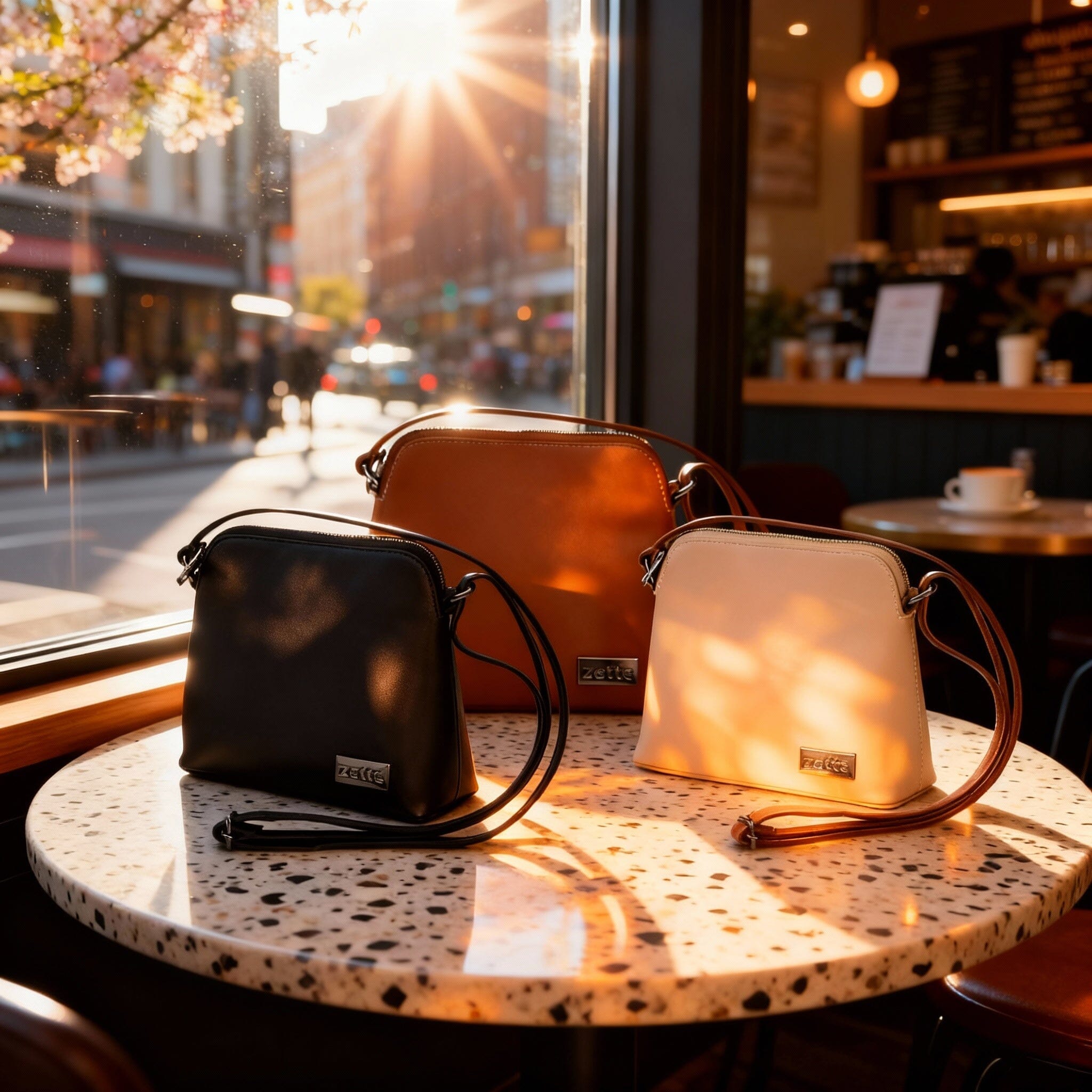




👗 Fashion & Accessories
- Handbags
- Wallets
- Belts
- Jackets
👟 Footwear
- Casual shoes
- Sneakers
- Sandals (low-stress applications)
🚗 Automotive Interiors
- Seat covers
- Door panels
- Dashboard trims
🛋 Furniture & Décor
- Upholstery
- Wall panels
- Office interiors
📦 Packaging Innovation
- Luxury boxes
- Reusable wraps
- Brand storytelling materials
Market Potential & Business Opportunity
The global vegan leather market is projected to grow at 20%+ CAGR, driven by:
- Ethical consumption
- Fashion brand sustainability mandates
- Regulatory pressure on plastics
💼 Circular Economy Revenue Models
- Waste-to-material licensing
- Co-location with food processing plants
- B2B supply to fashion houses
🌏 Opportunities for Developing Economies
Countries with strong agri-processing clusters can:
- Reduce waste-management costs
- Create green manufacturing jobs
- Move up the value chain
Challenges & Limitations
No innovation is without friction.
⚠️ Key Barriers
- Cost: Still higher than mass-produced PU leather
- Durability: Not yet suitable for heavy-duty or luxury leather use
- Scaling: Requires consistent waste streams and infrastructure
- Consumer Awareness: “Tomato leather” still needs education
Transparency and honest communication are essential to avoid greenwashing.
Future of Tomato Leather Innovation
🔬 What’s Coming Next
- Blended bio-materials (tomato + algae + hemp)
- Fully biodegradable coatings
- Enzyme-based strengthening
- Policy incentives for waste-based materials
🎯 Role in Net-Zero Fashion
Tomato leather aligns with:
- Extended Producer Responsibility (EPR)
- Scope 3 emissions reduction
- Circular design mandates
It’s not just a material—it’s a systems innovation.
When Waste Becomes Worth
Tomato leather challenges a deeply ingrained assumption: that waste is the end of a product’s life.
Instead, it reframes waste as the beginning of value creation.
In a world facing climate constraints, resource scarcity, and ethical reckoning, materials like tomato leather demonstrate that sustainability isn’t about compromise—it’s about intelligence, design, and courage.
Tomato leather proves that sustainability isn’t about sacrifice—it’s about smarter design.
❓ FAQs – Tomato-Based Vegan Leather
Q1. Is tomato leather completely biodegradable?
It can be partially to fully biodegradable depending on the binder and coating used.
Q2. Does it smell like tomatoes?
No. The processing removes organic odors completely.
Q3. Is it suitable for luxury fashion?
Currently better for premium sustainable brands than traditional luxury leather.
Q4. Is tomato leather waterproof?
Naturally water-resistant; enhanced with eco-coatings.
Q5. Is it scalable globally?
Yes—especially near large food-processing hubs.
Rethink Waste. Redesign the Future.
- Support brands using circular materials
- Advocate for waste-based innovation
- View sustainability as opportunity, not limitation
Because the next revolution in fashion might not come from a runway—but from a tomato peel.