Sales@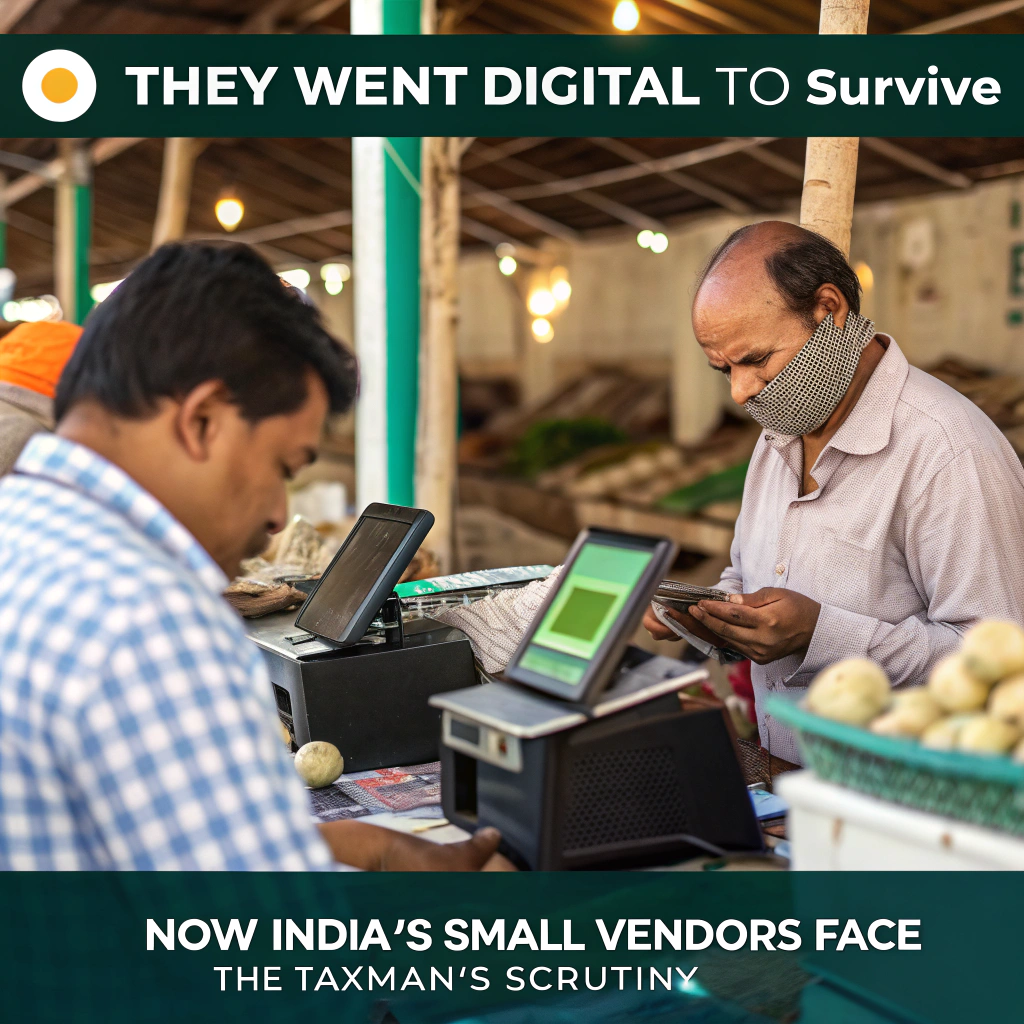
During the COVID-19 pandemic, India’s street vendors and small businesses — once operating exclusively with cash and local trust — were forced to adapt quickly or risk shutting down permanently. Digital payment apps like Paytm, PhonePe, and Google Pay emerged as lifelines. From your neighbourhood chaatwala to the thelawala selling fruits and vegetables, millions of vendors adopted QR codes and digital wallets practically overnight. For a while, this transformation was celebrated. It represented inclusion, modernization, and resilience. India’s informal sector — long seen as beyond the reach of formal banking and taxation — was now visible, trackable, and part of the digital economy. But in 2024 and now 2025, that very visibility has become a double-edged sword. Thousands of vendors have begun receiving notices from the Goods and Services Tax (GST) department. Many are confused. Some are scared. And most are asking: “Did we make a mistake going digital?” This blog explores the journey of small vendors going digital, why the government encouraged it, what’s gone wrong, and what India needs to do now to strike a balance between inclusion and compliance.
1. The Digital Push: A Survival Strategy Turned Necessity

The Pandemic and the Pivot
The pandemic disrupted the livelihoods of more than 50 million street vendors and small businesses in India. Lockdowns and fears of virus transmission led to a steep drop in cash transactions. To maintain customer trust and stay afloat, many vendors turned to digital payments. Fintech platforms, government schemes like PM SVANidhi (Pradhan Mantri Street Vendor’s AtmaNirbhar Nidhi), and awareness campaigns all played a role. QR codes became the new shopfront. A vendor selling ₹10 samosas suddenly had a digital payment history and, in the eyes of the system, became “visible.”
What Worked
- Ease of Transactions: No need for change or handling cash.
- Customer Preference: Urban and semi-urban consumers preferred digital for hygiene and convenience.
- Record-Keeping: Apps gave real-time dashboards and sales history.
- Credit Eligibility: Digital history meant loans through PM SVANidhi and microfinance became accessible.
2. The Flip Side: Digital Trail Invites Tax Scrutiny

What’s Happening Now?
Starting late 2023 and increasing in frequency through 2024-25, many small vendors have started receiving GST notices for the following reasons:
- Mismatch in income declared vs. digital payments received
- Non-filing or late filing of GST returns
- Operating without GST registration despite high digital turnover
- Suspicious volume of transactions triggering audit
For example, a paanwala in Delhi received a GST notice because his PhonePe account showed receipts of over ₹25 lakh in a financial year. He was shocked — he doesn’t even earn ₹1,000 on some days.
The Threshold Trap
The current GST registration threshold for businesses is ₹20 lakh per annum in most states. Many vendors, operating in cash earlier, never crossed this or kept informal books. But now, the digital trail presents the entire revenue picture — sometimes even overstating it (for instance, if friends and family also use the same UPI QR for convenience).
Why the Panic?
- Fear of Penalties: Vendors fear heavy penalties, interest, or even prosecution.
- Lack of Knowledge: Most don’t understand GST or their obligations.
- Mistrust of System: “We followed the government’s digital call and now we’re being punished,” is a common sentiment.
3. Government’s Intent vs. Ground Reality

The Government’s View
From the GST department’s perspective:
- A digital economy means greater visibility and transparency.
- All businesses above threshold must comply — digital or not.
- Data analytics is being used to flag suspicious or underreported income.
It is true that fraud and tax evasion have plagued India’s economy. But applying corporate-style tax scrutiny to micro-entrepreneurs who barely earn enough to survive may defeat the original goal of economic inclusion.
Examples of Mismatch
| Vendor Type | Digital Receipts FY 2023-24 | Declared Income | GST Notice? |
|---|---|---|---|
| Fruit Seller in Bhopal | ₹18,50,000 | ₹1,20,000 | Yes |
| Chaiwala in Pune | ₹22,10,000 | No ITR filed | Yes |
| Vegetable Vendor in Lucknow | ₹24,90,000 | ₹4,00,000 | Yes |
Note: In many cases, digital receipts include pass-through transactions not reflecting actual profit. But GST is based on turnover, not profit — hence the confusion.
4. The Real Cost of Compliance

What Vendors Are Dealing With
- Professional Help Needed: Filing GST returns or replying to notices requires CAs or tax consultants.
- Multiple Registrations: If operating across state borders (via mobile vans, etc.), multiple GST registrations may be required.
- Time Lost: Time spent at tax offices is time lost from earning.
- Fear of Harassment: Even if a vendor is compliant, being called in for questioning creates mental stress.
Cost of Filing and Legal Help
| Compliance Task | Estimated Cost (₹) |
|---|---|
| GST Registration | 1,000–3,000 |
| Monthly GST Filing | 500–1,000 per month |
| Responding to Notices | 2,000–10,000 |
| Legal Appeals (if needed) | 10,000–50,000 |
These numbers are massive for someone who earns ₹300–₹500 per day.
5. Why This Is a Structural Problem, Not Just a Tax Issue

Informality Was Never a Bug — It Was a Feature
India’s informal economy supports over 90% of employment. Its flexibility, low overhead, and resilience kept millions employed without government intervention for decades. Digitalization made them visible — but formalization needs to be phased and supportive, not punitive.
Financial Literacy Gap
Most small vendors:
- Don’t understand input tax credit or return filing.
- Don’t differentiate between personal and business QR codes.
- Are unaware of threshold limits or exemptions.
Without financial literacy drives, compliance will always lag.
6. What Needs to Change: Recommendations

For the Government
- Raise GST Threshold for Vendors to ₹50 Lakh Just like composition schemes exist for small traders, vendors should have relaxed thresholds.
- Simplify GST for Micro-Enterprises Quarterly returns, SMS-based systems, and single-page filings can reduce friction.
- Offer Amnesty Scheme for First-Time Defaulters Waive penalties for small vendors unaware of their obligations.
- Massive Financial Literacy Campaigns Use vernacular languages and local channels to explain digital income, tax basics, and record-keeping.
- Integration with PM SVANidhi Make GST compliance part of SVANidhi support, including offering GST return services through street-vendor unions.
For Digital Payment Platforms
- Help categorize transactions (business vs personal).
- Alert vendors when digital income nears ₹20 lakh.
- Offer simplified dashboards and compliance reminders.
For Civil Society & NGOs
- Organize camps with CA/tax volunteers.
- Translate GST circulars into vendor-friendly formats.
- Create legal helplines for notice management.
7. Voices from the Ground: “We Trusted Digital. Now We Regret It.”

Kamla Devi, a vegetable vendor in Jaipur, says:
“My daughter set up my Google Pay. Customers preferred it, so I agreed. Now I got a government letter saying I have to pay tax. How is that fair? I barely save anything.”
Mohammed Shafiq, a tea stall owner in Hyderabad:
“I used to deal in cash. Now they are saying I had ₹22 lakh in income because everyone paid by phone. But half of it was from neighbors using my QR to send money to their kids!”
Their stories reflect a common theme: Intentions were good. Execution lacked empathy.
Conclusion: Digital Inclusion Shouldn’t Mean Digital Harassment

India’s push toward a cashless economy cannot come at the cost of scaring away the very people it aimed to include. Tax authorities must distinguish between genuine evasion and innocent non-compliance due to lack of awareness. Instead of sending show-cause notices, the first response should be education, assistance, and empathy. Digitalization gave small vendors a fighting chance during COVID. Let us not punish them for choosing survival over silence. Let us build a system where being visible doesn’t make them vulnerable.
Final Thought: A Call for Balance
Small vendors are the soul of India’s informal economy — they represent hustle, resilience, and the spirit of “atmanirbharta.” As they transition from cash to code, they don’t need surveillance; they need support. Let’s ensure that their leap into the digital future is celebrated, not penalized.