Sales@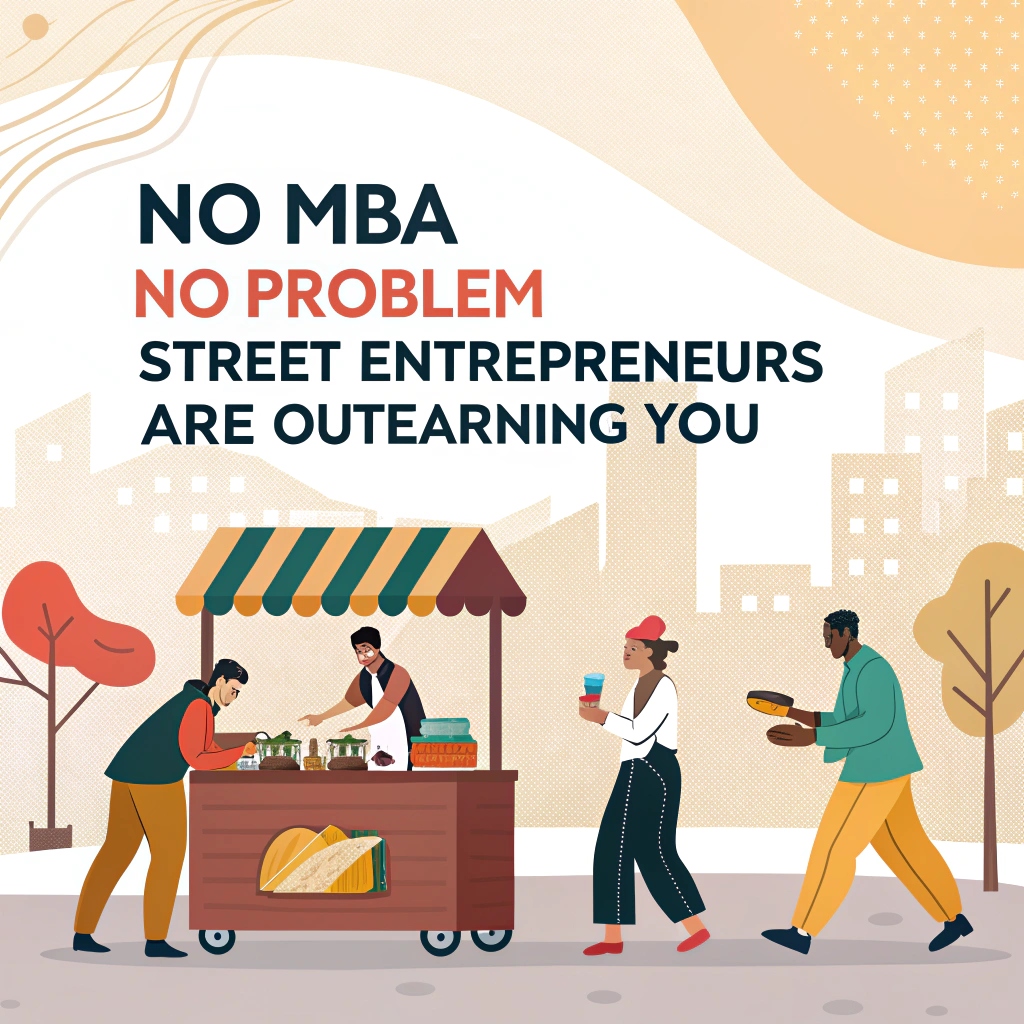
Introduction: The Rise of the Unqualified Millionaire
Once upon a time, success meant graduating from a top college, landing a secure job, and climbing the corporate ladder — one MBA, one promotion, and one 9-to-9 workweek at a time. But the landscape has changed.

Today, some of the wealthiest individuals in your city don’t have degrees, don’t work in air-conditioned offices, and certainly didn’t pay ₹20 lakhs for an MBA. They run food carts, salons-on-wheels, WhatsApp-based stores, and Instagram thrift accounts. They are street entrepreneurs, and not only are they thriving — in many cases, they’re out-earning traditionally educated professionals.
Section 1: What Does “Success” Mean in 2025?

1.1 The Changing Face of Financial Freedom
Modern success isn’t defined by corporate roles, but by:
- Freedom of time
- Control over income
- Ability to scale quickly
- Sustainable, direct-to-customer businesses
Degrees are useful — but not necessary anymore. The real value now lies in:
- Street smartness
- Marketing skills
- Customer experience
- Digital leverage
Section 2: The Reality of MBAs vs Street Hustlers

2.1 The ROI of an MBA in India
Top MBA from IIM = ₹20–25 lakh investment Average placement salary = ₹20–30 LPA (before tax) Break-even = 4–5 years (minimum) Meanwhile, a momos seller in Delhi or chaat vendor in Mumbai with zero formal education can:
- Earn ₹8,000–₹15,000/day
- Generate monthly profits of ₹1–2 lakhs
- Expand via carts, franchises, or delivery apps
2.2 Monthly Comparison Table
| Profile | Education | Monthly Earnings | Investment | Time to Profit |
|---|---|---|---|---|
| MBA Corporate Manager | MBA (₹20L+) | ₹80K–₹2L | 6–10 years | 4–5 years |
| Momos Vendor | Class 10th | ₹1.5–₹3L | ₹25K–₹1L | 2–4 weeks |
| Home Cook on Swiggy | No degree | ₹60K–₹2L | ₹10K–₹30K | Immediate |
| Mobile Mechanic | No college | ₹50K–₹1.5L | ₹5K–₹15K | Immediate |
Keyword Focus: mba vs business, street business earnings, roi of education india, startup without degree
Section 3: Real-Life Success Stories
3.1 The Pav Bhaji Franchise Owner
Vijay started with one pavement cart in Surat. He invested in hygiene, consistency, and digital payments. Now he owns 4 units, runs a cloud kitchen, and employs 20+ staff. Estimated monthly net: ₹4–5 lakh.
3.2 The Meesho Queen from Patna
Shalini, a homemaker with no formal business background, began reselling on Meesho. Today, she makes ₹1.2 lakh/month by managing orders via WhatsApp and offering home delivery through local delivery boys.
3.3 The Ice Cream Pushcart with 1M+ YouTube Views
Aslam sells handmade kulfi from a cycle cart in Hyderabad. A viral reel featuring his story brought him customers from across the city. He now makes ₹3,000–₹6,000/day and is planning a website launch. These are not exceptions — they are the new norm of hustle-driven success.
Section 4: Why Street Entrepreneurs Are Winning

4.1 Low Startup Costs, High Margins
Most street businesses are started with:
- ₹5,000–₹50,000
- Local ingredients
- Recycled or DIY infrastructure
But they generate 35%–70% profit margins consistently, while a formal MBA startup might burn crores before profitability.
4.2 Direct Access to Customers
No need for middlemen, retail channels, or marketing agencies. Street entrepreneurs use:
- Instagram, WhatsApp, Reels
- UPI payments
- Word of mouth
- Customer loyalty
Result? Higher margins and instant feedback loops.
4.3 No Corporate Bottlenecks
No performance reviews, HR hurdles, or slow decision-making. A street seller:
- Spots demand → tests → delivers in 24 hours.
- Gets feedback directly → improves instantly.
- Can scale by adding more people/carts rather than seeking VC funding.
Keyword Focus: street business scalability, direct-to-customer income, low investment business india, entrepreneurship without degree
Section 5: Tools of the Trade — No Office, No Problem

5.1 The Smartphone is the New MBA
With just a phone, street entrepreneurs now:
- Accept digital payments (UPI, PhonePe)
- Shoot Instagram Reels
- Broadcast on WhatsApp
- Get discovered on Google Business
- Sell on ONDC, Zomato, Meesho
5.2 Free & Low-Cost Digital Tools They Use
- Canva – For flyers and menus
- InShot – For video editing
- Google Forms – For pre-orders
- YouTube Shorts – For building a brand
Their digital strategy is basic, but effective — and it’s making them lakhs.
Section 6: Busting the Social Myths
“A degree is a must.” “Business is risky.” “Street sellers are poor.”
These are outdated beliefs. Here’s the truth:
- MBA ≠ guaranteed success
- Risk is lower in street business due to small capital
- Street sellers can be wealth creators and job providers
The real wealth is in cash flow, ownership, and independence — not just in PowerPoint presentations and boardroom titles.
Section 7: What You Can Learn — Even If You’re Educated

7.1 Don’t Wait to Be Qualified — Start Selling
You already have:
- Social media
- A phone
- People around you with needs
Start:
- A tiffin service
- A micro-course
- Home salon appointments
- Product reselling
7.2 Learn the Business Basics From the Streets
Street entrepreneurs are masters of:
- Pricing strategy
- Inventory control
- Upselling
- Location optimization
- Customer retention
These are not taught in MBAs — they’re learned on the ground.
7.3 Work Smart, Not Just Hard
Instead of long hours with no control, aim for:
- Multiple income streams
- Service-based gigs
- Freelance or local selling
- Building a loyal customer base
Section 8: The Hybrid Entrepreneur — The Best of Both Worlds

Not ready to quit your job or abandon your MBA path? You can still start:
- A side hustle on weekends
- Freelancing with services you’re good at
- Building an Instagram page for local products
- Running a cart with someone you trust
The “MBA by Day, Biryani Cart by Night” model is real — and it’s profitable.
Conclusion: Your Degree Doesn’t Define Your Destiny

We’re not saying don’t study or don’t go for an MBA. But don’t assume that a degree is your only passport to wealth. In 2025, the richest people in your locality might be:
- The street food seller outside your office.
- The reselling aunty from your apartment complex.
- The bike mechanic with a customer waitlist.
- The chaiwala with an Instagram page.
They didn’t wait for certificates. They built businesses. No MBA? No problem. If you can solve problems, sell value, and stay consistent — you can out-earn, outgrow, and outperform most degree-holders today.