Sales@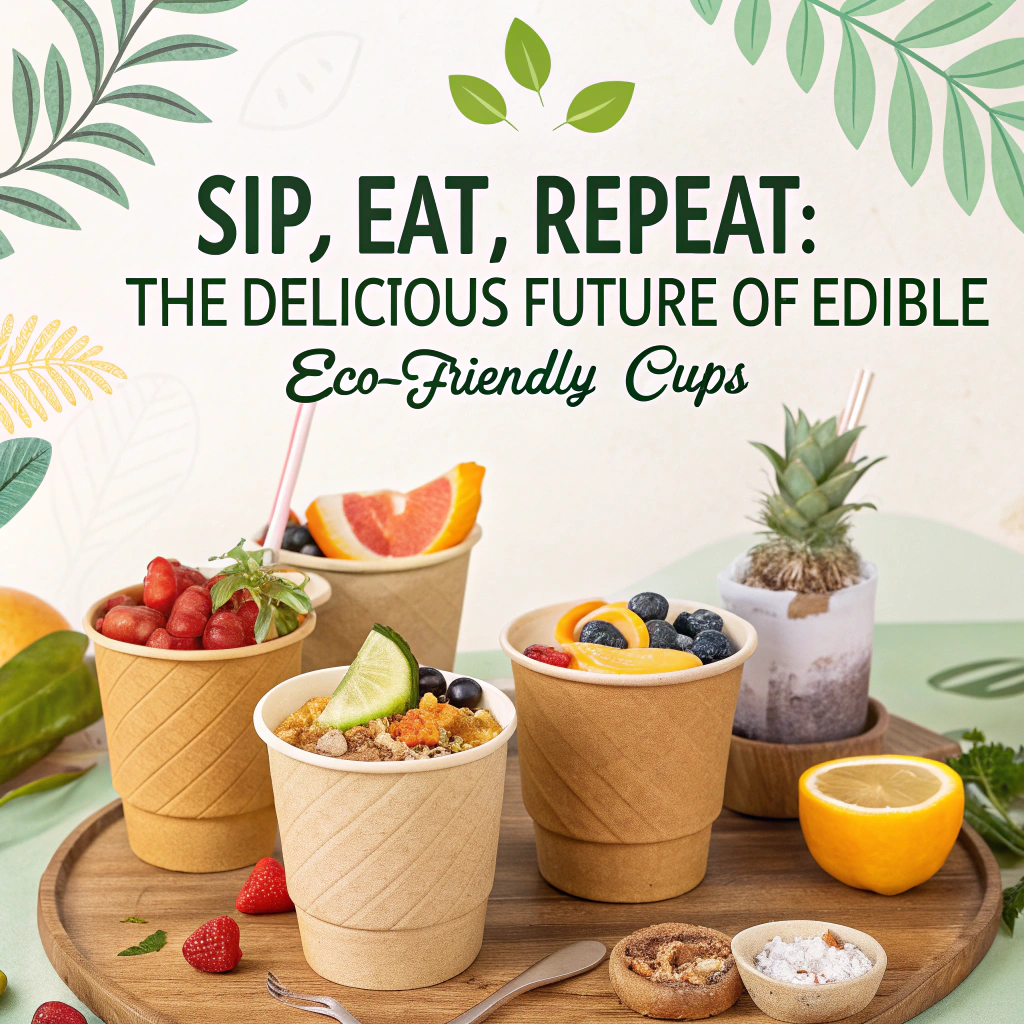
Why the humble cup might just save the planet, one bite at a time.

The Plastic Problem — Why Change is Urgent
“Every plastic cup used for 15 minutes lives on for 500 years.”

That’s not a metaphor. It’s a crisis. Every year, over 500 billion single-use cups are discarded globally. Most of them are lined with plastic, making them non-recyclable. Landfills overflow. Oceans choke. Wildlife suffers. And humans? We’re drinking poison by proxy. 🧠 Fast Fact:

💡 A single disposable cup = 0.11 kg of CO2 emissions. The above image shows an ocean filled with plastic cups, while a single glowing biodegradable cup stands out on the shore, symbolizing hope and sustainability amid pollution. Chapter 2: What Are Edible Cups?
“Not just cups — a movement you can munch.”

Edible cups are innovative, biodegradable containers made from natural, food-safe ingredients like wheat, rice, sorghum, corn, or seaweed. They’re sturdy enough to hold hot or cold beverages, yet soft enough to be consumed after use. Common Ingredients: Wheat bran – adds fiber & structure Corn starch – natural thickener Tapioca or rice flour – smooth finish Flavors: Chocolate, vanilla, mint, even masala chai! 🍫🌿 They’re not just eco-friendly. They’re people-friendly.

This image shows four edible cups in chocolate, vanilla, and mint flavors filled with colorful drinks, placed on a rustic wooden table with green leaves and eco-friendly tags. The Emotional Pull — Why People Are Loving Them

Sustainability isn’t a trend. It’s a feeling. It’s the warmth of doing good. It’s the guilt-free sip on a rainy afternoon. It’s the Instagram moment when your coffee cup becomes your snack.
Testimonials That Speak Volumes:
“I hosted a party with edible cups. There wasn’t a single piece of trash to clean up — just smiles!” – Riya, Sustainable Events Planner “My kids loved the vanilla cups. They drank milk and ate the cup. Win-win!” – Ramesh, Conscious Dad
Edible cups tap into our need to act, feel, and belong — to a planet-first community. The Business of Biting — Market Potential & Growth
Eco is not just ethical. It’s economical.
The global edible packaging market is expected to reach USD 820 million by 2032, growing at over 5.5% CAGR annually.
Why Now? Rise in sustainable consumer behavior Government bans on single-use plastics Millennial & Gen Z preference for ethical brands Instagrammable, novelty appeal for cafes and events
Business Tip: ☕ “Eco-entrepreneurs” are creating entire cafes, brands, and event planning services around edible cutlery.
Marketing Punchlines That Sell Sustainability Here are some powerful slogans and taglines brands are using (or should use):
“Drink It. Eat It. Save It.” 🌍 “The Cup That Cares.” “Guilt-Free Sipping Starts Here.” “Zero Waste. 100% Taste.” “Because Plastic is So Last Century.”
Use these across your:
- Packaging
- Social media ads
- Website banners
- Email campaigns
- Donor pitches
- The Donor Appeal — Why You Should Fund This
Donors don’t fund products. They fund impact. Imagine being the reason 500,000 fewer cups enter landfills next year. Imagine your name on a zero-waste movement that children talk about in schools.
Pitch to Donors:
🌱 “Your ₹10,000 donation could help distribute 25,000 edible cups to street vendors, eliminating an entire month of plastic waste.”
Alignment with CSR Goals: UN SDG #12: Responsible Consumption UN SDG #13: Climate Action UN SDG #14: Life Below Water You’re not donating. You’re rewriting the future. The Science Behind the Sip Edible cups are tested for:
- Heat resistance (can hold coffee for 30+ minutes!)
- Shelf life (up to 6 months in dry conditions)
- Flavor neutrality (no weird taste added to your drink)
- Nutritional value (fiber, low-cal, sometimes fortified with vitamins)
- Safe for kids. Safe for the planet.
📄 Conclusion: The Cup of the Future is in Your Hands

We don’t need a handful of people doing sustainability perfectly. We need millions doing it imperfectly but passionately — starting with their coffee cups. So tomorrow morning, when you sip your chai, ask yourself:
“Is my cup part of the solution — or the pollution?”