Sales@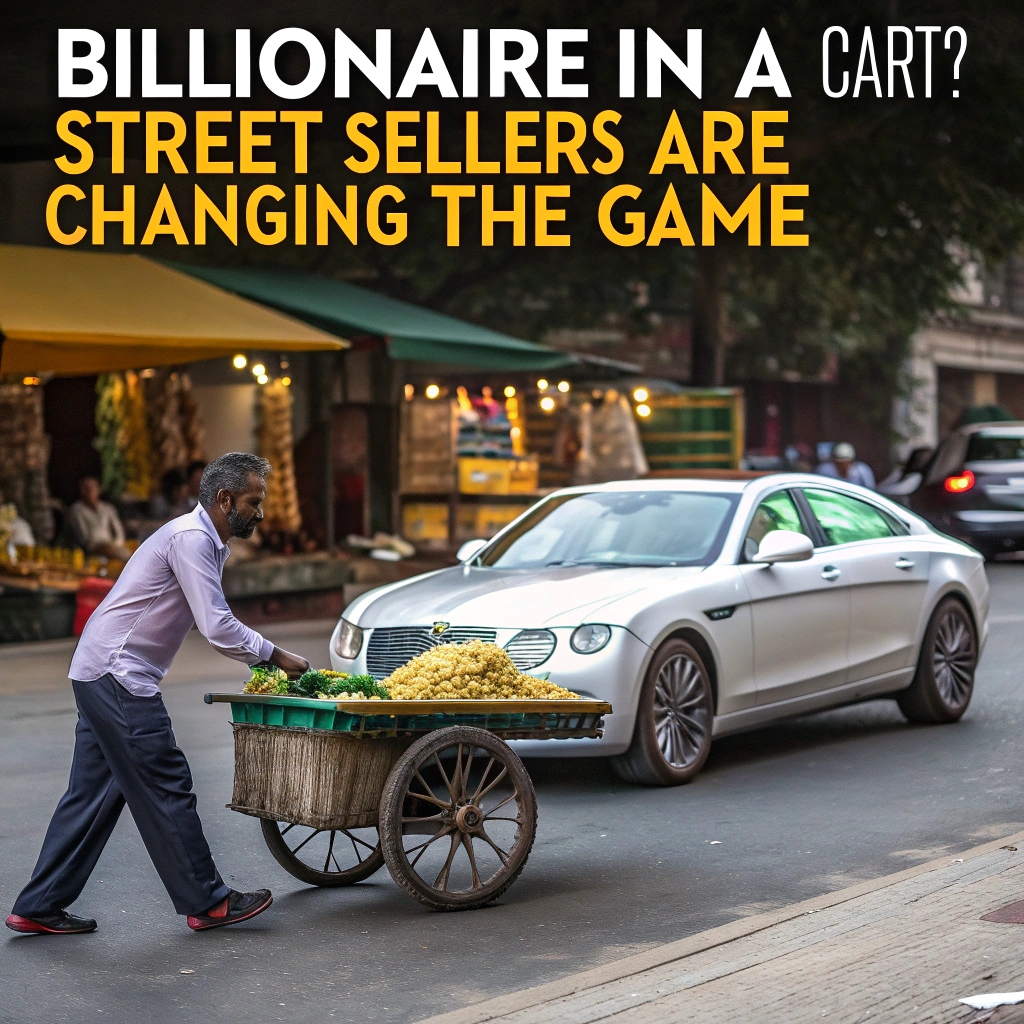
Introduction: The Billionaire You Walk Past Every Day
You might not notice him. He’s not wearing a suit, not stepping out of a luxury car. Instead, he’s setting up a food cart on the corner of a busy lane — calm, focused, and ready to sell. But what you don’t see is the big truth:

That man could be earning more than a mid-level executive in a corporate tower. Yes, you read that right. Street sellers are not just surviving — they are thriving, building wealth, scaling their businesses, and quietly rewriting the rules of entrepreneurship. The “Billionaire in a Cart” isn’t a joke anymore — it’s a real story of hustle, growth, and street-smart success.
1. The Profit Power of Simplicity

While corporates spend millions on planning and branding, street sellers focus on:
- Daily cash flow
- High-volume sales
- Low-cost operations
Let’s do a simple math: Bhelpuri Seller
- ₹30 per plate
- 400 plates/day = ₹12,000 revenue
- ₹7 profit per plate = ₹2,800/day
- Monthly profit = ₹84,000 (approx.)
All of this without any branding, HR, paid ads, or tech stack — just a killer location, product consistency, and customer connection.
2. No Degree, No Desk — Just Daily Discipline

Corporate professionals often follow structured roles, policies, and degrees. But street sellers follow instincts, customer behavior, and market signals. They:
- Wake up early to grab the best spot
- Learn from every customer conversation
- Watch and adapt to seasonal demand shifts
- Reinvent their offering without meetings or memos
This on-the-ground business schooling creates sharper decision-makers than many MBAs.
3. Digital Tools in Dirty Hands: The New Business Tech

Who said digital transformation is for the elite? Street sellers are leading the way in lean digital adoption:
- UPI & QR codes for seamless payment
- WhatsApp orders from regulars
- Google Maps listings for visibility
- Instagram videos for promotion
This gives them access to:
- Broader customer base
- Higher trust
- Faster payments
- Repeat business
4. Scaling the Cart: From Side Hustle to Street Empire

The idea that street selling is a one-person gig is outdated. Many vendors now:
- Hire helpers
- Run multiple carts or stalls
- Take bulk orders
- Deliver via Swiggy, Zomato, or directly
- Launch branded kiosks in malls and markets
Real Story: Ravi’s Roll Cart Empire
- Started with ₹1,500 and a roll cart in Pune
- Added 2 more carts in 18 months
- Built a loyal student and office-going customer base
- Now earns ₹3 lakh+/month and is scouting for a franchise partner
5. Emotional Business Beats Transactional Commerce

While large companies talk about CRM and loyalty programs, street vendors build loyalty through:
- Smiles and greetings
- Personal service
- Memory of regulars’ preferences
- Flexible payments
The result?
- Lifetime customers
- Daily walk-ins
- Free word-of-mouth advertising
This is the heart of grassroots entrepreneurship — building a business on real relationships, not algorithms.
6. Why Street Sellers Win Where Startups Fail

Startups often burn out on:
- High customer acquisition costs (CAC)
- Poor cash flow
- Market mismatch
- Scaling too fast
Street sellers thrive because they:
- Know their customers personally
- Operate in high-footfall zones
- Adjust quickly to demand
- Have zero burn rate and 100% earn rate
They focus on what matters — value, speed, and cash.
7. The Psychology of the Hustler’s Mindset

Street vendors develop:
- Resilience: They face weather, police, and competition daily
- Focus: They optimize sales per square foot
- Innovation: New combos, new spots, new pitches
- Fearlessness: They don’t fear rejection, they adapt
This billionaire mindset — built on failure, repetition, and people skills — is something most white-collar workers never develop.
8. Lifestyle Freedom: They Own Their Time
Imagine:
- No fixed boss
- No 9-to-5 stress
- No endless meetings
- Daily earnings you can control
- Complete freedom to expand or pause
That’s the street seller’s life. While corporate employees wait for permission, vendors act instantly. It’s not just about wealth — it’s about freedom.
9. Real Wealth, Quietly Built
They may not post on LinkedIn. They might not own a domain name. But they own:
- Debt-free assets
- Gold and savings
- Cash-rich businesses
- A strong local reputation
And unlike many funded startups, they turn a profit every single day.
10. Lessons for Every Entrepreneur and Professional
No matter your background, you can learn from these cart-based billionaires:
- Master consistency over complexity
- Serve better before selling more
- Keep costs low, energy high
- Treat every customer like family
- Reinvest, don’t overspend
Street sellers are India’s invisible MBA faculty — teaching the principles that make real businesses succeed.
Final Thoughts: The Cart Is the New Corner Office
The next time you pass a vendor, don’t see a poor seller — see a quiet empire builder, possibly earning more than a software engineer or MBA graduate.

The streets are full of unseen billionaires — people who’ve mastered hustle, heart, and human connection to build real wealth without noise or validation. The “Billionaire in a Cart” isn’t a dream. It’s already happening.
- Support your local sellers
- Learn from their grit and growth
- Share this blog to celebrate real, grounded entrepreneurship
- Want to start your own journey? Start small. Think smart. Hustle daily.