Sales@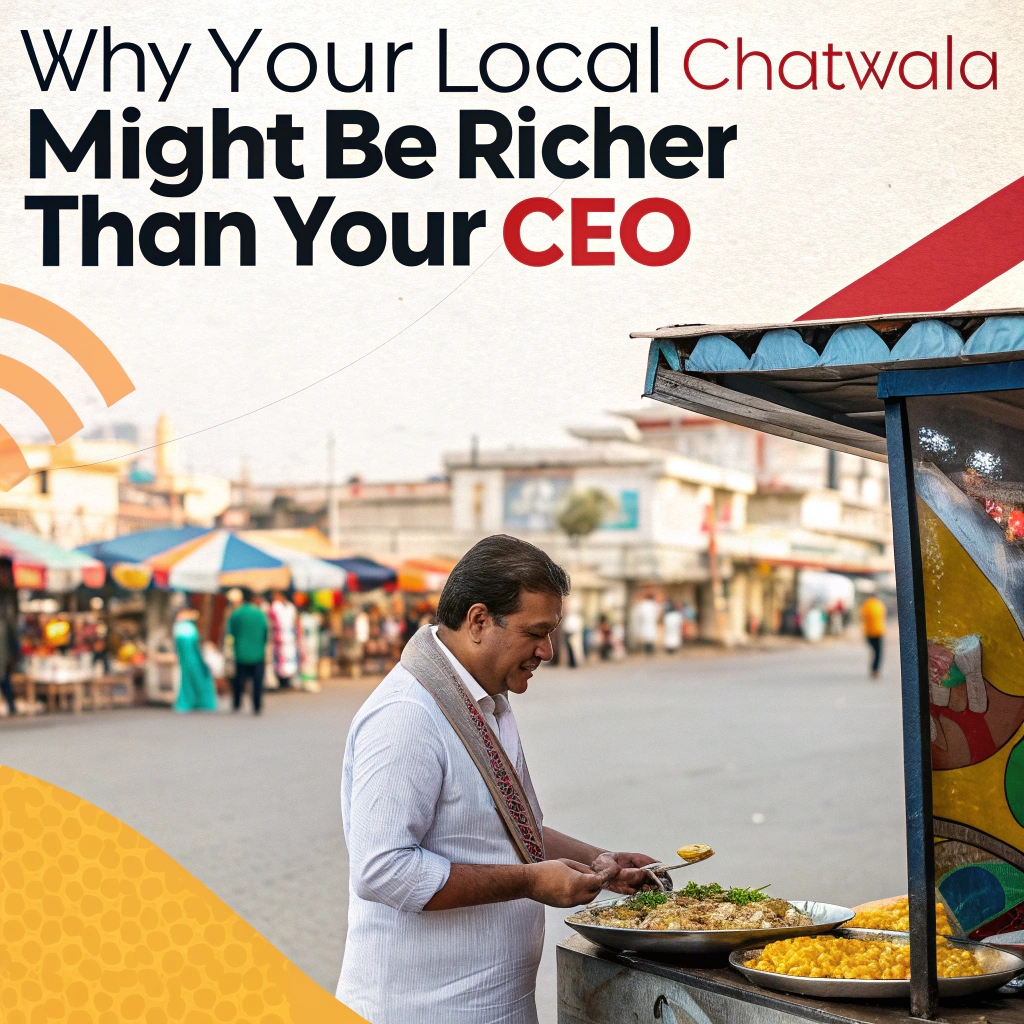
Introduction: The Untold Wealth on Your Street Corner
When you think of wealth and success, images of CEOs in boardrooms or business leaders in skyscrapers usually come to mind. But what if I told you that your friendly neighborhood chaatwala — the person serving piping hot golgappas or pani puri — might actually be earning more than some corporate executives?

This isn’t a fairy tale or an exaggeration. In India’s vibrant informal economy, street vendors are building substantial wealth every day, often surpassing the monthly income of salaried professionals. In this blog, we explore why your local chaatwala might be richer than your CEO, what makes their business model so powerful, and the lessons corporate workers can learn from these street-smart entrepreneurs.
1. High Volume, High Margin: The Profit Formula

A successful chaat stall can serve hundreds of customers daily. Let’s break down the numbers:
- Price per plate: ₹20
- Average customers/day: 500
- Revenue/day: ₹10,000
- Profit margin: 30–40% (₹3,000–₹4,000/day)
- Monthly profit: ₹90,000–₹1,20,000
Most corporate executives earn a monthly salary that’s comparable or even less — but without the daily cash flow and direct control over profits.
2. Lean Operations = Maximum Profit

Unlike corporate businesses with heavy overheads, chaatwalas keep costs low:
- Minimal rent (often a public space or shared cart)
- Low employee costs (family-run or self-managed)
- No advertising budget (word-of-mouth marketing)
- Simple supply chain and inventory
This lean cost structure maximizes profitability, enabling vendors to retain a larger share of revenue compared to corporate salaries weighed down by taxes, commuting, and other deductions.
3. Daily Cash Flow Beats Monthly Salary

Chaatwalas earn in cash, every day, without waiting for the month-end paycheck. This allows for:
- Instant reinvestment in stock and supplies
- Savings growth without delay
- Flexibility to manage expenses
- Quick response to market changes
This kind of financial liquidity is a major advantage over salaried employees, who often rely on fixed monthly paychecks.
4. Customer Loyalty Built on Relationships

Your local chaatwala knows you by name. They remember your preferences, offer extra chutney, or give a little discount when you’re a regular. This personal connection translates into:
- Repeat customers
- Free word-of-mouth advertising
- Seasonal bulk orders during festivals
This relationship-driven business model is far more effective than corporate loyalty programs and expensive marketing campaigns.
5. Digital Payments and Business Growth

Many street vendors have embraced technology to increase sales:
- Accepting UPI and QR payments for convenience
- Using WhatsApp for bulk orders and customer communication
- Leveraging Google My Business to attract new customers
This digital integration helps them scale and modernize without losing their personal touch.
6. Flexibility and Agility That Corporates Can’t Match

Chaatwalas adjust prices on the fly, introduce new items based on demand, and change locations if needed — all decisions made in real-time without layers of approvals. This business agility enables them to adapt quickly to market trends, weather, and customer preferences.
7. Real Success Stories: Street Vendors Making It Big
Many street vendors have turned their humble stalls into thriving businesses:
- Starting with one cart, expanding to multiple stalls
- Hiring employees and managing teams
- Building brand loyalty in their communities
- Earning lakhs per month with zero formal education
These stories highlight the power of persistence, community trust, and smart money management.
8. Lessons for Corporate Employees
Corporate workers can learn from their street vendor counterparts:
- Focus on customer relationships
- Maintain a lean cost structure
- Prioritize daily execution over long planning
- Embrace flexibility and quick decision-making
- Value consistency and persistence
Adopting these principles can improve business results and career growth.
Conclusion: Rethinking Wealth and Success

The next time you visit your local chaatwala, remember — the person serving you those spicy snacks might be running a business that rivals or exceeds many corporate salaries. Their success is a testament to hard work, agility, and community connection. In a world that often equates success with office jobs, it’s time to recognize and respect the entrepreneurial spirit thriving on our streets.
- Support your local vendors — their success is a key part of the economy
- Share this story to spread awareness about grassroots entrepreneurship
- Reflect on how agility, relationship-building, and lean operations can transform your own work